The Nigerian Dwarf goat is West Africa's small dairy breed. With milk exceptionally rich in butterfat and an affectionate temperament, it is winning over a growing number of companion goat keepers around the world.

Nigerian Dwarf kid — © CC0 Countryside
Origin and History
Like the Pygmy, the Nigerian Dwarf originates from West Africa. It belongs to the same group of tropical dwarf goats (West African Dwarf), but its selective breeding took a different path: while the Pygmy was bred for a compact, muscular build, the Nigerian Dwarf was developed for its dairy qualities — milk rich in butterfat (6 to 10%), ideal for artisan cheesemaking and soap making.
Arriving in the United States in the 1950s, it is now recognized by the American Dairy Goat Association (ADGA) and the American Goat Society (AGS) as a full-fledged dairy breed.
Appearance and Breed Standard
The Nigerian Dwarf is finer-boned and more elegant than the Pygmy, with legs proportioned to its body. Its silhouette resembles that of the large dairy breeds (Saanen, Alpine) in miniature form.
- Height at withers: 17–22 in (43–57 cm) for does, 19–24 in (48–60 cm) for bucks
- Weight: 40–65 lb (18–30 kg) depending on sex
- Profile: straight to slightly dished (dish face accepted)
- Ears: erect, medium-sized
- Udder: well attached, well-placed teats — a key criterion for dairy lines
- Horns: present in the wild, often disbudded in companion herds
Coat Colors: An Endless Palette
This is one of the breed's distinctive strengths: the Nigerian Dwarf is shown in every color and combination, including moonspotted, bicolor, tricolor patterns and blue eyes (highly sought after). You'll find:
- Black, white, chocolate, caramel, fawn
- Agouti in every shade
- Moonspotted patterns (accepted)
- Bicolor and tricolor coats
- Blue or heterochromatic eyes (highly prized in selective breeding)
This genetic diversity of coat colors makes the Nigerian Dwarf especially interesting territory for color genetics enthusiasts.
Temperament
The Nigerian Dwarf is known for its gentle, affectionate and sociable character. It bonds deeply with its keepers and enjoys human contact. Calmer than the Pygmy as an adult, it remains curious and playful.
Like all goats, it is a social animal that absolutely needs a goat companion. Two Nigerian Dwarfs make an ideal pair; they can also be paired with Pygmies in the same enclosure.
Milk Production
The Nigerian Dwarf is the only dwarf breed officially recognized as a dairy breed by American associations. Its output remains modest in volume but remarkable in quality:
- Daily yield: 1 to 3 pints (0.5–1.5 liters) per day depending on genetics and feeding
- Butterfat content: 6 to 10% (versus 3–4% for large dairy breeds)
- Protein content: high — excellent for artisan cheesemaking
- Lactation: 250 to 300 days with regular milking
Its small size makes milking easy, even for people with physical limitations. Some keepers also like to let the kids nurse and only take a portion of the milk.
Feeding
The Nigerian Dwarf's dietary needs are close to those of the Pygmy, with special attention during lactation:
- Grass hay ad libitum (an irreplaceable base)
- Dairy concentrates in amounts suited to production and physiological stage
- Minerals and trace elements (calcium, phosphorus, selenium, copper) in free access
- Fresh water always available — milk production is highly sensitive to hydration level
Reproduction
The Nigerian Dwarf is polyestrous year-round — one of its major differences from seasonal breeds. This trait makes it possible to plan kiddings at any time of year.
- Puberty (does): 7–8 months, but first breeding recommended at a minimum of 12–18 months (depending on weight)
- Cycle length: 18–21 days
- Gestation: 145–153 days on average
- Litters: 2 to 4 kids common
Health and Longevity
The Nigerian Dwarf is a sturdy breed with a life expectancy of 12 to 15 years. It is susceptible to the same conditions as other goat breeds: internal parasites, enterotoxemia, coccidiosis in young animals. Vaccination and regular parasite monitoring are essential.
A specific watch-point: Nigerian Dwarf bucks are particularly prone to urinary calculi (urolithiasis), especially if fed too many concentrates or an imbalanced Ca/P ratio. A balanced diet and good hydration are essential.
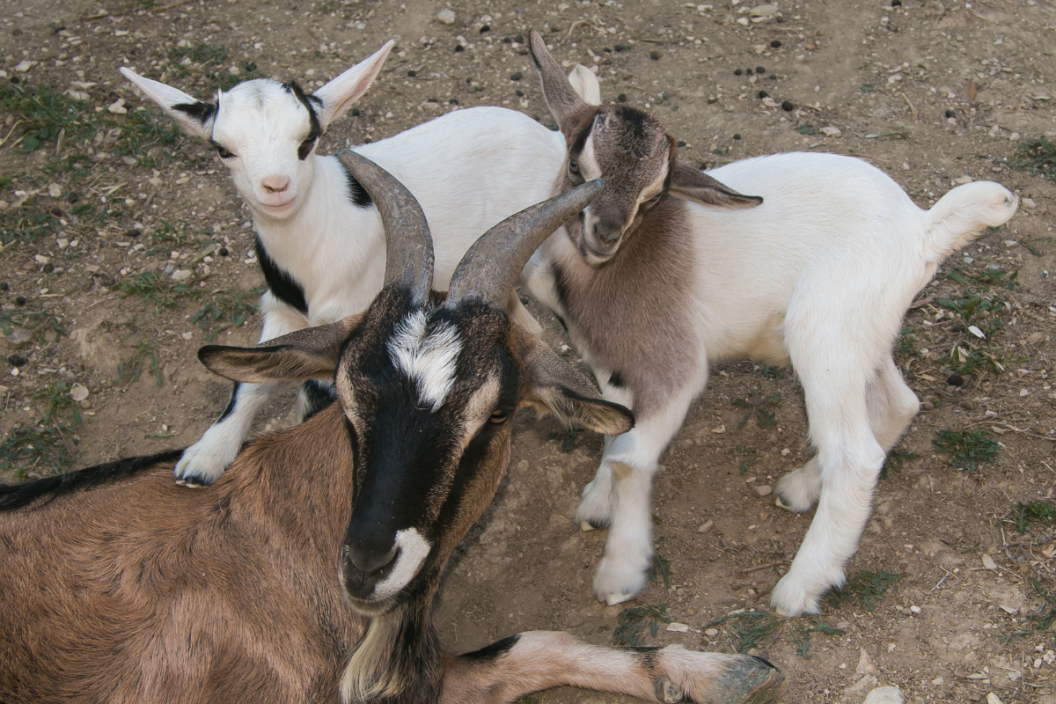
Adult Nigerian Dwarf: compact build and calm temperament
Manage your Nigerian Dwarf herd with CapriGen
Pedigree, coat color simulation, milk tracking, health and lineage certificates — all in one place.
🐐 Try CapriGen free